Movies credited to José María Yázpik
43 movie credits in the Trakio catalog
José María Yazpik (born November 13, 1970) is a Mexican film and television actor. Yazpik was born in Mexico City in the bosom of a wealthy family, the son of a successful gynecologist, Dr. Jose Maria Meza, and Cristina Yazpik. His first acting job came from a friend of his father, who produced the TV movie The brute with the angel of death. He moved to Mexico City to study at CEA of Televisa. At the CEA he studied with future celebrities like Arath de la Torre, Fabián Corres and Eduardo Rill. Upon graduating he was offered minor roles in youth soap operas on Televisa, which he wanted to refuse, however the exclusive contract with the station forced him to accept all the roles he was offered, and was additionally punished with two months without pay.He received his first major role on television in the soap opera The Dove in 1995, produced by José Rendón, which stopped production because of the tragic death of its protagonist, actor Gerardo Hemmer. The following year he participated in his second telenovela, Song of Love, produced by Luis de Llano Macedo, and in the film Última llamada, directed by Carlos Garcia Agraz. In 1997 his career began to take flight with interests in television increasingly important, playing the villain role of youth in telenovelas Pueblo chico, infierno grandeand Ángela, both produced by José Alberto Castro.
Movie credits
Showing 1–24 of 43
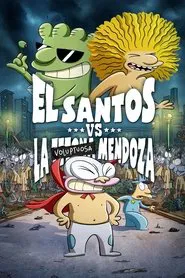
El Santos vs la Tetona Mendoza
In a zombie-infested world, El Santos, an overweight pacheco fighter, has recently divorced La Tetona Mendoza, a voluptuous, wild female wrestler. To get out of his depression, Santos begins a campaign to help Sahuayo's zombie population. However, his philanthropy soon becomes a wild, profitable ride that causes an accidental genocide of zombies, causing Mexico's economy to bankrupt and for his ex-wife to assume the presidential title. In a country ruled by women, Santos must stop his wife and her female-dominated empire, and restore the zombies to the streets of Mexico.

Bad Education
La mala educación
When an old friend brings filmmaker Enrique Goded a semi-autobiographical script chronicling their adolescence, Enrique is forced to relive his youth spent at a Catholic boarding school. Weaving through past and present, the script follows a transvestite performer who reconnects with a grade school sweetheart. Spurred on by this chance encounter, the character reflects on her childhood sexual victimization and the trauma of closeting her sexual orientation.
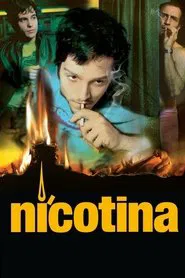
Nicotina
A hacker who is spying on a pretty neighbour messes up his assignment to break into Swiss bank accounts for Russian mobsters.