Filmes de Yves Montand
104 filmes com participação creditada no catálogo do Trakio
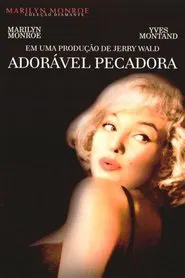
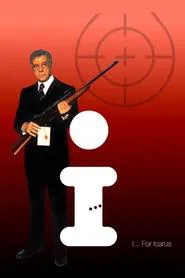
Ivo Livi (13 October 1921 – 9 November 1991), better known as Yves Montand, was an Italian-born French actor and singer. He is said to be one of France's greatest 20th-century artists. Montand was born Ivo Livi in Stignano, a small village in the hills of Monsummano Terme, Italy, to Giovanni Livi, a broom manufacturer. Montand's mother Giuseppina Simoni was a devout Catholic. The family left Italy for France in 1923 following fascist Benito Mussolini's rise to power. He grew up in Marseille, where, as a young man, he worked in his sister's beauty salon (Salon de Coiffure), as well as later on the docks. He began a career in show business as a music-hall singer. In 1944, he was discovered by Édith Piaf in Paris; she made him part of her act. Montand achieved international recognition as a singer and actor, starring in many films. He is recognised for crooner style songs, with those about Paris becoming instant classics. He was one of the best known performers at Bruno Coquatrix's Paris Olympia music hall, and toured with musicians including Didi Duprat. In October 1947, he sang "Mais qu'est-ce que j'ai?" (music by Henri Betti and lyrics by Édith Piaf) at the Théâtre de l'Étoile. Betti also asked him to sing "C'est si bon" but Montand refused. Following the success of the recording of this song by the Sœurs Étienne in 1948, he decided to record it. Montand was also very popular in the Soviet Union and Eastern Europe, where he did a concert tour in 1956-57. During his career, Montand acted in American motion pictures as well as on Broadway. He was nominated for a César Award for Best Actor in 1980 for I comme Icare and again in 1984 for Garçon! In 1986, after his international box-office draw power had fallen off considerably, the 65-year-old Montand gave one of his best remembered performances, as the scheming uncle in Jean de Florette, co-starring Gérard Depardieu, and Manon des Sources (both 1986), co-starring Emmanuelle Béart. The film was a worldwide critical hit and revived Montand's profile in the United States, where he made an appearance on Late Night with David Letterman. In 1951, he married Simone Signoret, and they co-starred in several films throughout their careers. The marriage was, by all accounts, fairly harmonious, lasting until her death in 1985, although Montand had a number of well-publicised affairs, notably with American actress Marilyn Monroe, with whom he starred in one of her final films, Let's Make Love. He was the stepfather to Signoret's daughter from her previous marriage, Catherine Allégret. Montand's only child, a son named Valentin, by his second wife, Carole Amiel (b. 1960), was born in 1988. In a paternity suit that caused commotion across France, another woman accused Montand of being the father of her daughter and went to court to obtain a DNA sample from him. Montand refused, but the woman persisted even after his death. In a court ruling that made international headlines, the woman won the right to have Montand exhumed and a sample taken. The results indicated that he was not the girl's biological father. He supported left-wing causes during the 1950s and 1960s, and attended Communist festivals and meetings. ... Source: Article "Yves Montand" from Wikipedia in English, licensed under CC-BY-SA.
Créditos em filmes
1–24 de 104
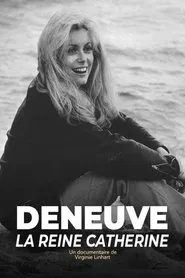
Deneuve, la reine Catherine
She is said to be cold, secretive and mysterious. She has the reputation of not letting anything of her intimate thoughts, her private life, her joys as well as her torments show through. She managed to protect her family, her loves, her choices from the curiosity of magazines and her public. A tour de force for a sixty year long career with more than one hundred and thirty films shot with the greatest filmmakers in the world. However, the raw material for a very personal account of Catherine Deneuve exists: it can be found in the interviews given by the actress from her beginnings until today. They allow us to discover another Catherine Deneuve.

Trintignant by Trintignant
Trintignant par Trintignant
A portrait of a man of rare elegance and enigmatic charm, versatile and successful: Jean-Louis Trintignant, one of the most critically acclaimed French actors of the last sixty years, known for his numerous roles on stage and screen.
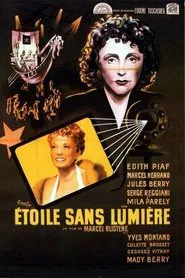
Star Without Light
Étoile sans lumière
An aspiring singer tries to break into films during the early talkie era. She is hired to dub the singing and speaking voice of a silent-movie favorite. Sworn to secrecy, the fill-in must stand by in silence as the star receives all the praises and plaudits.